

Are insurance brokers considered learned professionals exempt from the New Jersey Consumer Fraud Act? This issue is raised in a case pending before the Supreme Court of New Jersey captioned Lowe v. Audet, et al. (Docket No. 090940).1 Touted as one of the most broad-reaching and powerful anti-fraud statutes in the country, the New Jersey Consumer Fraud Act (“CFA”) has for decades not applied to certain professionals which have been exempted from the CFA’s provisions in the first instance. But this recent case before the New Jersey’s highest court promises to redefine the scope and sweep of the CFA not only for insurance brokers, but for professionals and semi-professionals throughout the state.
The CFA provides for an award of treble damages and attorneys’ fees if a defendant is found liable. The CFA provides, in pertinent part, as follows:
The act, use or employment by any person of any commercial practice that is unconscionable or abusive, deception, fraud, false pretense, false promise, misrepresentation, or the knowing, concealment, suppression, or omission of any material fact with intent that others rely upon such concealment, suppression or omission, in connection with the sale or advertisement of any merchandise or real estate, or with the subsequent performance of such person or aforesaid, whether or not any person has in fact been misled, deceived or damaged thereby, is declared to be an unlawful practice; provided, however, that nothing herein contained shall apply to the owner or publisher of newspapers, magazines, publications or printed matter wherein such advertisement appears, or to the owner or operator of a radio or television station which disseminates such advertisement when the owner, publisher, or operator has no knowledge of the intent, design or purpose of the advertisement.
The CFA is, in essence, a strict liability statute. Under the CFA, “[a] practice can be unlawful even if no person was in fact misled or deceived thereby.” Cox v. Sears Roebuck & Co., 138 N.J. 2, 17 (1994). It is a mere “capacity to mislead” that is key to establishing an unlawful practice under the CFA. While intent is not required to prove an affirmative misrepresentation, the CFA does require that a plaintiff alleging deception by “omission” prove that the defendant had actual knowledge of the omitted information for liability to arise.
The CFA was first enacted in 1960. Sixteen years later in 1976, the New Jersey Appellate Division considered whether the CFA applied to real estate brokers in Neveroski v. Blair, 141 NJ Super. 365 (App. Div. 1976). There, the Appellate Division held that real estate brokers were exempt from the CFA.
As the appeal in Neveroski was pending, the Legislature amended the CFA to include “real estate” as “merchandise” subject to the CFA. Accordingly, while real estate brokers are now subject to the CFA, the analysis employed by the Appellate Division lived on and gave rise to what is considered the “learned professional exemption.” For decades after, courts often cited the following two paragraphs in conjunction with this exemption to the CFA:
A real estate broker is in a far different category from the purveyors of products or services or other activities. He is in a semi-professional status subject to texting, licensing, regulations and penalties through other legislative provisions. Although not on the same plane as other professionals such as lawyers, physicians, dentists, accountants or engineers, the nature of his activity is recognized as something beyond the ordinary commercial seller of goods or services – an activity beyond the pale of the act under consideration.
Certainly no one would argue that a member of any of the learned professions is subject to the provisions of the Consumer Fraud Act despite the fact that he renders “services” to the public. And although the literal language may be construed to include professional services, it would be ludicrous to construe the legislation with that broad a sweep in view of the fact the nature of services does not fall into the category of consumerism.
In 2004, the learned professional exemption reached the New Jersey Supreme Court in Macedo v. Dello Russo, 178 NJ 340 (2004). The issue in that case was whether advertising by a doctor was subject to the CFA. The Supreme Court ruled that doctor-advertising fell outside the CFA. The Legislature could not have intended to regulate conduct that could not legally exist. The Supreme Court reasoned that advertising by doctors was proscribed by law when the CFA was first enacted in 1960, and that the analysis in Neveroski – that the CFA could not be considered to apply to learned professional in the first instance based on the nature of the services they provide – still applies. In addition, the Macedo Court reasoned that the learned professional exemption had been on the books for forty years and that the legislative acquiescence indicated approval of the judicially created exemption to CFA liability. According to the Supreme Court, “We consider ourselves bound by that legislative acquiescence. If we are incorrect in our assumption, we would expect the legislature to take action to amend the statute.”
Two years later, in 2006, the Appellate Division ruled that insurance brokers are exempt from the CFA in Plemmons v. Blue Chip Insurance Services Inc., 387 N.J. Super. 551 (App. Div. 2006). Again, using the oft-cited two-paragraph reasoning in Neveroski, the Appellate Division in Plemmons reasoned that insurance brokers are semi-professionals due to their extensive licensing, fiduciary standards, and regulation under the New Jersey Department of Banking and Insurance.
But Plemmons was called in to question in 2019 by another Appellate Division case, Shaw v. Shand, 460 N.J. Super. 592 (App. Div. 2019). There, the appellate panel considered whether “semi-professionals such as home inspectors should be deemed to be learned professionals” for the purpose of the CFA exemption to liability. On the narrow issue before it, the Shaw panel determined that home inspectors were subject to the CFA because they are not learned professionals. But analytically, the Shaw panel departed from the analysis used in Plemmons and Neveroski concerning the scope of the CFA exemption. The Shaw panel reasoned that only those professionals historically considered learned – those in medicine, the law, and divinity – qualify as learned professionals, without any extension to semi-professionals. The Shaw panel was persuaded by the New Jersey Attorney General’s amicus curiae submission, which argued that the CFA was intended to have a wide-ranging sweep and impact and did not extent to semi-professionals. Thus, while Shaw did not directly address whether insurance agents (or other semi-professionals) qualified for the exemption to the CFA, its analysis questioned the scope of Neveroski, Plemmons and other rulings.
Recently, the Supreme Court took head-on the question of the CFA liability for learned professionals and semi-professionals in Lowe v. Audet, et al. There, the Superior Court and Appellate Division followed Plemmons and applied the CFA exemption to insurance agents. Those courts reasoned as Neveroski did and determined that, since 2006, the Legislature has not amended the CFA to apply to insurance producers or other semi-professionals. Accordingly, the courts held that insurance producers are exempt from CFA liability and dismissed the plaintiff’s CFA claims with prejudice.
The New Jersey Supreme Court took the interlocutory appeal to resolve what the plaintiff called as “confusion among the lower courts” as to the scope of the CFA exemption for semi-professionals. In amicus curiae briefs to the Supreme Court, the New Jersey Attorney General and plaintiffs’ bar organizations argued that the scope of the learned professional exemption should be limited to doctors and lawyers – in essence, Macedo and no more. This leaves insurance producers and other professionals out of the exemption and subject to CFA liability.
At oral argument on April 27, 2026, the Supreme Court signaled its interest in revisiting the learned professional exemption altogether and questioned whether the exemption has any basis under the CFA. Thus, it appears likely that the Court will provide guidance on the CFA of an entirely new nature. This decision could radically affect the liability of insurance agents in New Jersey. But it could also impact the liability of other professionals, such as architects, dentists, engineers, and veterinarians. In fact, the Court could even eliminate the learned professional exemption altogether, thus now finding that doctors and lawyers are subject to liability under the CFA. This could subject a panoply of professionals to treble damages and attorney’s fees and costs for any misrepresentation – whether innocent or not – in connection with the provision of goods and professional services.
Meet the Authors
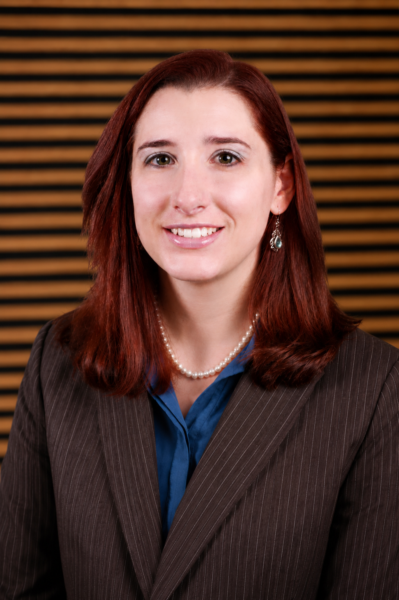 Kate DiGeronimo
Partner, Mound Cotton
Kate DiGeronimo is a partner at Mound Cotton who works as a litigator with both trial and appellate experience. She has also litigated numerous arbitrations, including securities, commercial and employment disputes. She represents broker dealers, financial advisors, insurance brokers, financial firms and investment advisers in litigation, arbitration and regulatory investigations. She also represents lawyers and law firms in professional responsibility matters, including conflicts, sanction proceedings, legal malpractice cases, and proceedings before the attorney grievance committee. She also litigates and tries commercial, construction and professional liability cases.
Kate graduated from Fordham University School of Law, where she was editor of the 2009 Mulligan Moot Court Competition and a staff member of the Fordham Law Intellectual Property Law Journal. She also received her undergraduate degree, magna cum laude, from Fordham University and is a member of Phi Beta Kappa.
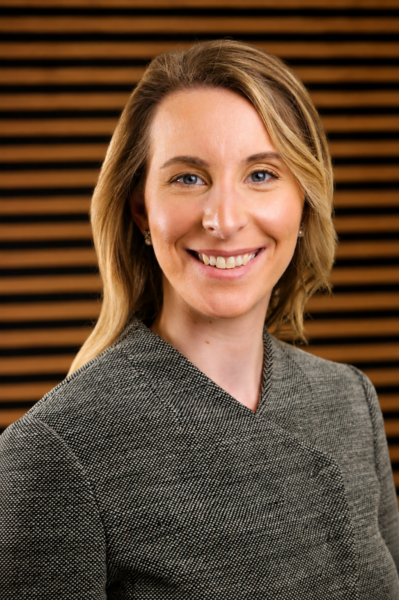
Katharine Anne Lechleitner
Special Counsel, Mound Cotton
Katharine Anne Lechleitner serves as special counsel at Mound Cotton. She has worked on a variety of cases, namely those around property damage coverage. Super Lawyers recognized Katharine as a New Jersey Rising Star in Insurance Coverage for the past three years
She graduated cum laude from Seton Hall University School of Law, where she was a student attorney for the Center for Social Justice, Immigrants’ Rights/International Human Rights Clinic and a member of the mock trial team. She received her B.A., cum laude with honors, from Ursinus College in Politics with minors in English and International Relations.
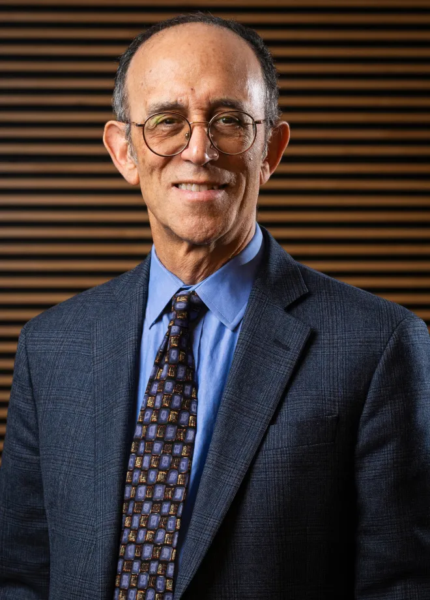 Barry Temkin
Partner, Mound Cotton
Barry Temkin is a partner at Mound Cotton. He is a litigator with extensive trial experience, having tried over fifty jury trials to verdict who representing broker dealers, financial advisors, insurance brokers, financial firms and investment advisers in litigation, arbitration and regulatory investigations. He has also litigated numerous arbitrations, including securities, commercial and employment disputes. Barry also represents lawyers and law firms in professional responsibility matters, including conflicts, sanction proceedings, fee disputes, legal malpractice cases and proceedings before the attorney grievance committee. He also litigates and tries commercial, construction and professional liability cases.
Barry is an adjunct professor at Fordham University School of Law, where he teaches courses on securities regulation and professional responsibility, and Secretary/General Counsel to Westbeth Music Inc., a nonprofit tax-exempt musicians’ cooperative. He is a graduate of the University of Pennsylvania Law School and the University of Rochester.
1 Kate DiGeronimo and Barry Temkin are Partners, and Katharine Anne Lechleitner is Special Counsel at Mound Cotton Wollan & Greengrass LLP. The firm serves as counsel for two of the defendants in Lowe v. Audet, et al.
News Type
PLUS Blog
Business Line
Errors and Omissions (E&O), Professional Liability, Risk Manager/Insurance Buyer
Contribute to
PLUS Blog
Contribute your thoughts to the PLUS Membership consisting of 45,000+ Professional Liability Practitioners.
Related Podcasts

Icons & Innovators Episode 4
In this episode, Michelle Klein of Berkley Professional Liability sits down with…
Related Articles

Protecting Your Purpose: Why Nonprofit Management Liability Matters More Than Ever
Passion and purpose motivate many individuals to serve on nonprofit boards. Whether…

From Foundations to Emerging Risks: Inside D&O University
The D&O liability landscape continues to evolve, making a strong understanding of…

AI Liability and Insurance: Emerging Coverage, Claims, and Silent Risk–Webinar Recap
Artificial intelligence has become embedded in everyday professional life and work. Businesses…