

Insurance agencies and brokerages, like most businesses, are increasingly using artificial intelligence and large language models (LLMs), such as ChatGPT and Gemini, in their daily operations. AI can provide significant advantages, including greater efficiency, enhanced productivity, and cost savings. For example, brokers may use AI to generate policy comparisons and proposals, accelerating the quoting process.
However, these benefits come with risks. AI-generated information may be inaccurate, leading to improper advice, coverage misrepresentations, or binding coverage that violates underwriting guidelines. Overreliance on AI may also increase exposure to errors and omissions (E&O) claims and litigation.
Insurance agencies can reduce AI-related risks by following these five best practices:
1. Require Licensed Producer Oversight
AI can improve efficiency, but it does not replace the professional judgment or responsibility of a licensed producer. Treat AI-generated content as a preliminary draft that may contain errors.
Before any quote, proposal, coverage summary, or policy comparison is provided to a client, a qualified individual should independently verify all material information, including coverage terms, limits, deductibles, exclusions and endorsements, against the applicable policy forms and source documents.
2. Establish a Formal AI Policy
Agencies should adopt a written AI policy that defines:
- Approved AI tools;
- Information that may or may not be entered into AI platforms;
- AI outputs requiring licensed producer review;
- Tasks AI may assist with or perform autonomously, if any; and
- Permitted and prohibited uses.
Approved uses may include document summarization and administrative support. Prohibited uses should include independently binding coverage, modifying limits, providing coverage advice, or communicating coverage determinations without human review.
The policy should be distributed to all employees, supported by training, and reinforced through written acknowledgment of compliance.
3. Manage Third-Party AI and Data Security Risks
Confidential client information, such as loss runs, financial records, proprietary information, or other sensitive data, should not be entered into unapproved public AI platforms.
Agencies should also review contracts with AI vendors to ensure they adequately address confidentiality, cybersecurity controls, data retention, indemnification, insurance requirements, and limitations of liability.
4. Document AI Usage
As with other client communications and insurance placement decisions, agencies should maintain records of AI-related activity.
Documentation should reflect the client’s requests, information available to the producer, AI-generated output, any modifications or verification performed by agency personnel, communications with the client, and the coverage ultimately procured. Such records may provide valuable evidence in defending a future E&O claim.
5. Review Insurance Coverage
Agencies should review their own E&O policies to determine whether any exclusions, limitations, or endorsements affect coverage for AI-related activities. Likewise, agencies should be aware of any AI-related coverage restrictions contained in policies they recommend or place for clients.
Conclusion
AI is a valuable tool that can help insurance agents and brokers improve efficiency and service. However, it should supplement rather than replace the oversight, expertise, and professional judgment of a licensed producer.
Meet the Authors

Timothy G. Ventura, Esq.
Shareholder, Marshall Dennehey
Timothy G. Ventura, Esq. is a shareholder and chairs the Insurance Agents and Brokers Liability Practice and the Professional Liability Practice Group in the Philadelphia office of Marshall Dennehey. He focuses his practice on the defense of errors and omissions claims brought against insurance agents and brokers, among other professionals. He also oversees and manages the day-to-day operations of a broad range of professional liability matters in the Philadelphia office. He may be reached at TGVentura@mdwcg.com.
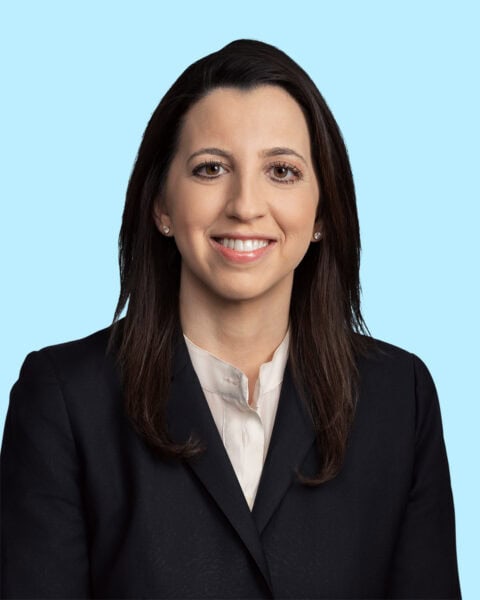 Dana A. Gittleman, Esq.
Chair, Real Estate E&O Liability Practice Group, Marshall Dennehey
Dana A. Gittleman, Esq. chairs the Real Estate E&O Liability Practice Group in Marshall Dennehey’s Philadelphia office. She defends claims and lawsuits brought against insurance agents and brokers, attorneys, financial entities, large product manufacturers, lenders, directors and officers, real estate, and other professionals. She may be reached at DAGittleman@mdwcg.com.
News Type
PLUS Blog
Business Line
Errors and Omissions (E&O), Professional Liability
Contribute to
PLUS Blog
Contribute your thoughts to the PLUS Membership consisting of 45,000+ Professional Liability Practitioners.
Related Podcasts

Icons & Innovators Episode 4
In this episode, Michelle Klein of Berkley Professional Liability sits down with…
Related Articles

From Foundations to Emerging Risks: Inside D&O University
The D&O liability landscape continues to evolve, making a strong understanding of…
AI Liability and Insurance: Emerging Coverage, Claims, and Silent Risk–Webinar Recap
Artificial intelligence has become embedded in everyday professional life and work. Businesses…

Claims Made Bites: Claims Made vs. Claims Made and Reported
Two similar-sounding policy forms with an important difference. One leaves the door…