

Every professional liability underwriter knows the reassuring answer to a hard question. Ask a firm how it keeps errors out of its work, and the answer is about people and processes: review, supervision, a second signature, the seasoned judgment of someone who has seen the problem before. For the first time, that answer increasingly runs through a machine. And the reassurance holds only if the human judgment behind a machine’s output can be located and evaluated.
The Exposure Is No Longer Hypothetical
For years, AI was something professionals experimented with quietly. That era is over. According to NERA’s analysis of FactSet data, approximately 76 percent of S&P 500 companies mentioned AI in their 2025 Form 10-K filings, up from 28 percent in 2021.1 The technology is increasingly showing up in the operations, disclosures, and client-facing work of the firms the professional liability market insures.
The litigation has followed. Drawing on the Stanford Law School Securities Class Action Clearinghouse, analysts at WTW identified 53 securities class actions filed from 2020 through the first half of 2025 that relate in some way to AI.2 Using Cornerstone’s tracked trend categories, the annual pace accelerated sharply in 2024, with AI-related filings more than doubling from seven to fifteen,3 and the trend persisted in 2025: Cornerstone Research and the Stanford clearinghouse counted sixteen AI-related filings during the year, making AI the largest tracked trend category, ahead of SPAC and cryptocurrency filings.4 Regulators moved in parallel. Beginning in 2024, the SEC brought its first “AI washing” enforcement actions against investment advisers that marketed AI capabilities they had not actually deployed, and it has continued to pursue allegedly misleading AI-related claims involving advisers, entities, and individuals.5, 6
For underwriters, what matters is not some abstract danger in AI itself, but how material the technology has become to disclosures, to claims, and increasingly to questions about the applicable standard of care. Securities claims are an early warning signal, but the underwriting question extends beyond public-company disclosures. Wherever AI materially influences professional work, the defensibility of the human reliance decision becomes part of the exposure.
What the Claims Actually Turn On
Look closely at the AI-washing actions and many of the early AI-related securities suits, and a pattern emerges that should interest anyone who prices professional or management liability. The firms in trouble were not punished merely for using AI, or for declining to. The recurring problem was the gap between what they said about the technology and what they could substantiate. The regulator’s message reduced to a familiar discipline in new clothing: be prepared to support the claims you make.
That is precisely where the human-judgment question lives. A great many firms now make governance assertions as a matter of routine: “we keep a human in the loop,” “we use AI responsibly,” “every output is reviewed.” Underwriters should hear those statements for what they are: representations. A firm that asserts human oversight but has no way to demonstrate it has made a representation it may be unable to substantiate. When a claim arrives, opposing counsel will test the assertion directly, and the distance between oversight that is claimed and oversight that can be evidenced is exactly where exposure concentrates. The more exposed insured may not be the one ignoring AI, but the one confidently describing a control it cannot document.
The Question Underwriting Has Always Asked
Strip away the technology and the professional-liability inquiry remains familiar: did the professional meet the applicable standard of care? The controls underwriters have long examined, including engagement processes, peer review, and supervision, help reduce the risk of a departure from that standard and provide evidence of how the professional work was performed.
AI does not displace the governing standard, but it adds a new evidentiary problem: whether the organization can demonstrate that professional judgment was actually exercised when an automated output materially influenced the work. A firm can adopt a capable AI tool without taking on much additional risk by itself. The exposure grows when judgment quietly exits the process while everyone assumes it is still present. Two firms will both tell you they use AI. In one, a qualified person owns each consequential decision and can explain why the machine’s output was accepted, revised, or rejected. In the other, that output flows into client work under deadline pressure, lightly skimmed and broadly trusted. On an application, the two look identical. In a deposition three years later, they present very different risks. The difference comes down to a question a plaintiff’s lawyer will eventually ask out loud: who decided?
A Framework for the Question
Whether you are pricing the exposure or managing it from inside a firm, the useful diligence reduces to four questions. Together they describe a discipline I have come to call Judgment Assurance, aimed not at the AI system, but at the human decision to rely on it.
Define the decision. Can the firm say, in advance, which decisions require human judgment and at what threshold, or has “the system recommended it” quietly expanded to cover decisions no one ever decided should require a person at all?
Record the basis. Is there a record, not merely of the AI’s output, but of the reasoning by which a human accepted, modified, or overrode it? A contemporaneous judgment record is generally more persuasive than an explanation reconstructed after a claim arises.
Own the outcome. Did a qualified person own the call in substance, so that accountability rests with someone identifiable rather than dissolving into the tool? Responsibility that cannot be located is responsibility that cannot be defended.
Guard against drift. Is anything checking the slow slide from judgment to rubber stamp, the automation complacency that sets in as a reliable-seeming tool earns more trust than it has proven? Oversight that exists on paper but never overrides anything is not oversight.
A firm that can answer these is doing two valuable things at once. It is more likely to catch the bad output before it reaches a client, and for the one that slips through, it can show whether a human actually exercised judgment or simply deferred to the machine.
For underwriters, these questions translate directly into application diligence: identify the decisions in which AI materially influences professional work, determine who has authority to accept or override an output, ask what contemporaneous record is preserved, and examine whether the firm tests for automation complacency over time.
The Duties Already Exist
None of this requires waiting for a new rulebook. In December 2025, the SEC’s Investor Advisory Committee recommended that the agency press issuers to define what they mean by AI, disclose board oversight mechanisms if any, and report separately on the material effects of AI deployment on internal operations and consumer-facing matters.7 Yet Chair Paul Atkins and Commissioner Hester Peirce each expressed skepticism about prescriptive, AI-specific disclosure mandates, emphasizing the capacity of existing principles-based rules to address material developments.8
That posture matters. The absence of an AI-specific rule does not suspend otherwise-applicable duties of care, candor, supervision, or oversight where they apply. For most firms, the practical question is not merely whether a new obligation will arrive, but whether they can demonstrate compliance with the obligations they already carry.
The early cases call for attention, not alarm. As WTW has noted, AI-related securities suits so far have largely tracked the patterns of conventional shareholder litigation.9 But the volume is climbing, the theories are widening, and inadequate board oversight of AI is emerging as a potential fiduciary-duty theory. The firms that fare best will be the ones that can show their work.
The Next Frontier: Agents That Act
This pressure sharpens as the technology shifts from AI that suggests to AI that acts. When an agent executes a sequence of steps on its own, human judgment migrates to the boundaries: what the agent may decide alone, what conditions must stop it and return control to a person, and whether an escalation hands that person enough context to exercise real judgment rather than reflexively approve. “Who decided?” becomes a question about how carefully those boundaries were drawn, and whether anyone was watching while the agent worked inside them.
An Answerable Question
For four decades the professional and management liability markets have built ever more sophisticated ways to assess the people behind a risk. AI does not change the object of that inquiry; it changes where the answer hides. What the market has been missing is a structured way to assess, and ultimately to price, the human judgment around the machine: who decided, on what basis, and whether there is a record that would hold up under scrutiny.
The most insurable professional firms will be the ones that can reconstruct that judgment on demand. The underwriters who learn to ask for it will be pricing what the application alone cannot reveal.
Meet the Author
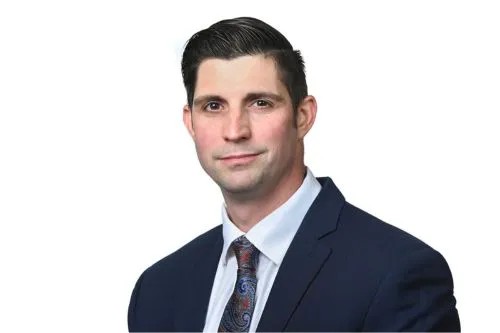
Justin Kavalir
Attorney, CPA, Founder of Judgment Assurance Institute
Justin Kavalir, Attorney and CPA, is the founder of the Judgment Assurance Institute and originator of the Judgment Assurance framework, a decision-governance discipline built on the premise that as AI mediates more institutional decisions, accountability remains human. The framework gives organizations a structured way to define, record, own, and guard the judgment behind AI-influenced decisions. He also serves as General Counsel at Louisiana Tech University. He can be reached at jkavalir@judgmentassurance.com.
This article is offered for general informational and educational purposes and does not constitute legal advice. The author’s views are his own and do not necessarily reflect those of his employer or any organization with which he is affiliated.
1 NERA Economic Consulting, “AI and Securities Class Action Litigation” (Dec. 17, 2025).
2 WTW, “More Buzz Than Sting: The State of AI-Related Securities Litigation” (Nov. 2025).
3 Cornerstone Research and Stanford Law School Securities Class Action Clearinghouse, “Securities Class Action Filings—2024 Year in Review” (Jan. 2025).
4 Cornerstone Research and Stanford Law School Securities Class Action Clearinghouse, “Securities Class Action Filings—2025 Year in Review” (Jan. 2026).
5 U.S. Securities and Exchange Commission, “SEC Charges Two Investment Advisers with Making False and Misleading Statements About Their Use of Artificial Intelligence” (Mar. 18, 2024).
6 U.S. Securities and Exchange Commission, “SEC Charges Rimar Capital Entities and Owner Itai Liptz for Defrauding Investors by Making False and Misleading Statements About Use of Artificial Intelligence” (Oct. 10, 2024); U.S. Securities and Exchange Commission, “SEC Charges Founder and Former CEO of Artificial Intelligence Startup with Misleading Investors” (Apr. 9, 2025).
7 SEC Investor Advisory Committee, “Recommendation of the SEC Investor Advisory Committee Regarding the Disclosure of Artificial Intelligence’s Impact on Operations,” approved Dec. 4, 2025.
8 Paul S. Atkins, Chair, U.S. Securities and Exchange Commission, “Remarks at the Investor Advisory Committee Meeting” (Dec. 4, 2025); Hester M. Peirce, Commissioner, U.S. Securities and Exchange Commission, “Iceboxes and Soapboxes: Remarks at the Meeting of the SEC Investor Advisory Committee” (Dec. 4, 2025).
9 WTW, supra note 2.
News Type
PLUS Blog
Business Line
Cyber Liability, Directors and Officers (D&O), Employment Practices Liability (EPL), Errors and Omissions (E&O), Professional Liability, Risk Manager/Insurance Buyer
Contribute to
PLUS Blog
Contribute your thoughts to the PLUS Membership consisting of 45,000+ Professional Liability Practitioners.
Related Podcasts

Icons & Innovators Episode 4
In this episode, Michelle Klein of Berkley Professional Liability sits down with…
Related Articles

Protecting Your Purpose: Why Nonprofit Management Liability Matters More Than Ever
Passion and purpose motivate many individuals to serve on nonprofit boards. Whether…

From Foundations to Emerging Risks: Inside D&O University
The D&O liability landscape continues to evolve, making a strong understanding of…

AI Liability and Insurance: Emerging Coverage, Claims, and Silent Risk–Webinar Recap
Artificial intelligence has become embedded in everyday professional life and work. Businesses…