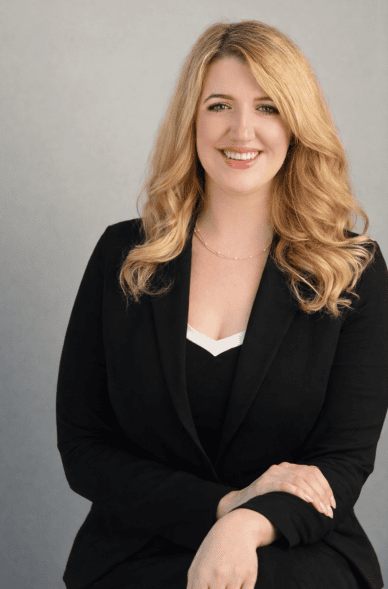
A Day in the Life: Jaycee Roth
We are taking a look at the typical workday and aspirations of insurance professionals at different companies and in different stages of their career.
In this edition of A Day in the Life, we explore the role a Managing Director in Cyber Digital Forensics and Incident Response, Jaycee Roth.
Background
What is your current position? How long have you been in it? How did you find it?
At Kroll, I serve as a Managing Director within our Cyber Risk Practice, where I’m responsible for leading and expanding our Canadian team. I’ve been with Kroll for nearly five years, contributing to the growth of our capabilities and supporting clients through an evolving cyber landscape
Please give a description of your current position, something that explains your role in the insurance marketplace and how you interact with others:
As an incident response lead, I’m the person who brings order to chaos when a cyber incident hits. I work closely with organizations and individuals who’ve been impacted, guiding them through containment, recovery, and the investigative process. In the insurance marketplace, that means collaborating with carriers, brokers, and breach coaches to ensure clients get rapid, coordinated support when they need it most.
What positions have you held to date? Why did you get into the insurance industry?
I’ve worked in various roles over the years, everything from Helpdesk Technician to SOC Analyst, Forensic Analyst, Team Lead, and eventually into more senior positions. Each step taught me something new and helped me become a stronger, more well‑rounded technical expert and leader.
I didn’t actually plan on ending up in the insurance world. It kind of happened by accident. What really pulled me in was my passion for helping people and organizations through really stressful cyber incidents. I’ve always been the calm voice in the room, the one who can take complex technical or forensic details and break them down in a way that actually makes sense. I think part of that comes from my background in Business Technology Management. Coming from a business program taught me how to bridge the gap between technical teams and non‑technical stakeholders, so being that ‘middle person’ feels really natural to me
I usually explain it like this: tech jargon can be a lot like a doctor using medical terms when they could just say, ‘You have a cold.’ My job is to cut through the noise and explain what happened in someone’s digital environment in a way that’s clear and human.
What do you love most about your position?
What I love most about my role is that no two days ever look the same. I’m constantly learning and sharpening my skills. Threat actors are always reinventing their tools and techniques to get around new security measures, and that constant evolution pushes us to grow just as quickly. It keeps the work challenging, fast‑paced, and genuinely exciting to work on.
What skills make someone successful in your position?
To be successful in this role, you need a blend of technical skill and the kind of personal qualities that keep you steady when things get chaotic. Talent and curiosity keep you sharp, but attitude is everything and you have to show up ready to solve problems, not panic about them. Time management and delegation matter because incidents move fast and no one can do it alone.
What really makes someone thrive, though, is a genuine passion for helping people and an eye for the tiny details that tell the bigger story. If you love digging into puzzles, staying calm under pressure, and supporting people when they’re having one of their worst days, you’ll fit right in.
Daily Structure
Please describe your typical workday.
A typical day for me starts with coffee and a quick dive into my inbox to see what’s unfolded overnight. Then I’m on a team call, doing a health check on all our active matters like checking who needs support, what’s moving, and what’s suddenly on fire. From there, the day becomes a mix of client touchpoints. I usually have a few status calls for ongoing incidents, plus a forensic‑update call where my team briefs me on the latest findings before I walk clients through what it all means.
Some days I’m also meeting new partners, running a lunch‑and‑learn, or working on content for presentations and articles. In the gaps between calls, I’m reviewing reports for cases that are wrapping up or building new material for our practice. And of course, everything can change in an instant. A new scoping call can drop in and completely reshuffle my day because anything that isn’t locked in for current clients is fair game to move. No two days ever look the same, and that constant motion is part of what keeps the job exciting.
What is your favorite part of the day and why?
My favorite part of the day is definitely our team call. It sets the tone for everything that follows. With remote work, it’s the closest thing to those casual ‘coffee in the kitchen’ moments we used to have, and it gives me that sense of connection before the day gets busy. It also helps me feel grounded and organized like I’m starting the day in control and aligned with the team.
What is the most challenging part of your day and how do you tackle it?
The most challenging part of my day is working with clients who are really struggling. There’s a real emotional weight to this job. It’s called cyber crime for a reason, and people often feel violated, vulnerable, and overwhelmed when it happens to them. I half‑joke that I’m a part‑time therapist because I’ve seen the full range of emotions: anger, fear, sadness, frustration.
My role is to meet people where they are, talk them through what’s happening, and help them keep moving toward recovery. Staying calm, empathetic, and clear helps ground them so we can focus on getting their operations back on track.
What can be tough is keeping a healthy boundary. When someone is having one of the worst days of their professional life, it’s hard not to carry some of that weight with you after the call. I’ve had to learn how to mentally ‘reset’ so I don’t bring that emotional load into the rest of my day
How do you achieve work life balance?
For me, work–life balance starts with actually using my vacation time and spreading it out through the year instead of saving it all for one big stretch. I love to travel, so exploring a new city is one of my favorite ways to reset.
Outside of work, I make a point of having hobbies that pull me completely away from tech. I’m a big reader and run a book club, I’m learning to sew, and I absolutely love live entertainment. Anything that gets me off a screen and back into the real world helps me stay grounded. I’m also lucky to have a great group of friends who pull me out of the house and understand the nature of my job, so they never make me feel guilty for checking my phone a little more than most people.
What do you do to ensure you are progressing in your career and continuously learning?
Continuous learning is built into my role as new threats emerge every day, and part of my job is to investigate them and figure out how to respond. So staying sharp isn’t optional, it’s just the reality of the work.
Beyond that, I’ve been making a real effort to get more involved in the community. This March will actually be my first time attending PLUS Symposium in New York, and I’m genuinely excited about it. Connecting with industry experts outside of client calls is incredibly valuable. It’s those conversations about what we’re seeing in the field that always give me fresh insights and new perspectives to bring back to my team
Aspirations
What professional advice would you give your younger self?
I’d tell my younger self that careers are built through people as much as performance. Growth really accelerated for me one I started investing in the broader industry by doing things like attending conferences, meeting people outside of my immediate circle, asking for mentorship and essentially prioritizing building genuine relationships. Most opportunities don’t come from cold applications, they come from conversations.
What is one of your goals you are working towards and have not yet accomplished?
One goal I’m still working toward is finding a more formal way to contribute to education in our field. I’ve really enjoyed the mentorship opportunities I’ve had so far, and I’ve spoken as a guest at quite a few universities. It’s made me realize how much I love sharing what I’ve learned. I’d love to eventually help shape course curriculum or even teach a class. I haven’t fully fleshed out what that looks like yet, but it’s something I’m moving toward.
Other Questions
How do you prioritize when everything feels urgent?
When everything feels urgent, I lean heavily on experience because there’s no perfect formula, but over time you learn the difference between a true emergency and something that’s just inconvenient or loud. This is where delegation becomes essential. Having a deep bench of experts at Kroll also makes a huge difference. Having a team, you trust can make or break a case. If multiple fires are burning at once, we divide and conquer so clients get the support they need right away. My team is so intuitive with me that it almost feels like working with a dance partner, they can anticipate my next move, and they jump in to handle things that fall within their wheelhouse before I even have to ask. That level of trust and rhythm is what keeps everything moving, even on the busiest days
What tools or software do you use daily?
This question would be much more fun for examiners, for myself it’s simple outlook, teams, mattermost, mediashuttle, Microsoft dynamics.
How do you collaborate with other teams (e.g., underwriting, claims, brokers)?
I’m really fortunate to work closely with our Cyber Insurance Services (CIS) team at Kroll. They’re the bridge that keeps practitioners connected with underwriting, claims, and broker partners, and they make sure we’re consistently showing up as the face of the business.
They coordinate everything from interviews, blog posts, podcasts, lunch‑and‑learns, in‑person meetings, you name it. Their support lets me stay focused on the technical and client‑facing work while still maintaining strong relationships across the insurance ecosystem. It feels like a true partnership, and it makes cross‑team collaboration seamless.
Do you work remotely, in-office, or a mix of both? How does that shape your day?
I work remotely, although we do have office spaces. Because I’m on the phone so much, and most of my conversations are extremely sensitive, it honestly makes more sense for everyone that I stay home. Otherwise, I’d just be tucked away in a closed room all day anyway.
Working remotely actually supports my work life balance too. Between calls, I can reset by doing small things around the house, which helps break up the intensity of the day and keeps me grounded
How do you stay connected with colleagues or clients?
Staying connected with colleagues and clients is actually one of the most fun parts of my job! It falls under business development, but it rarely feels like ‘work.’ We plan all kinds of connector events like happy hours, dinners, and other fun activities that let us spend real time together. At the end of last year we did a museum scavenger hunt, which was an absolute blast. Those moments help build genuine relationships, not just professional ones.
What’s one moment or accomplishment you’re especially proud of?
It’s hard to choose just one moment, but becoming the first female Managing Director in our cyber practice is something that will stay with me forever. It wasn’t just the title but it was what happened afterward. Women across the firm reached out to tell me that seeing me in that role made them feel like there was finally a path for them too. Hearing that stopped me in my tracks. It made all the long nights, the tough cases, and the self‑doubt feel worth it.
Another moment that meant a lot to me was being recognized in 2022 as one of Canada’s Top Women in Cybersecurity by IT World Canada. It felt surreal, like one of those moments where you look back at your younger self and think, ‘You’d be so proud of how far we’ve come.’ Both experiences reminded me why I do this work and who I’m doing it for.
If you could describe your job in three words, what would they be?
I have a cute shirt from Splunk that says, “looking for trouble” and I think that is really funny and #relatable
If you want a serious answer: High‑stakes, Analytical, Collaborative
Typical Day in the Life
8am-9am: Waking up, making my coffee, hanging out with my cats.
9am-10am: Opening up outlook, going through emails and juggling what my priorities for the day might be, Report editing
10am-11am: Team call, going through case management and priorities/action items.
11am-12pm: Client status update with counsel, client and vendor partners
12pm-1pm: Lunch time, maybe also another call while I try to eat depending on the day
1pm-2pm: Business development meeting for either planning, actual event, or content creation
2pm-3pm: Internal team call to prep for forensic call with client
3pm-4pm: Forensic update call with client and counsel
4pm-5pm: Scoping call for new case intake