
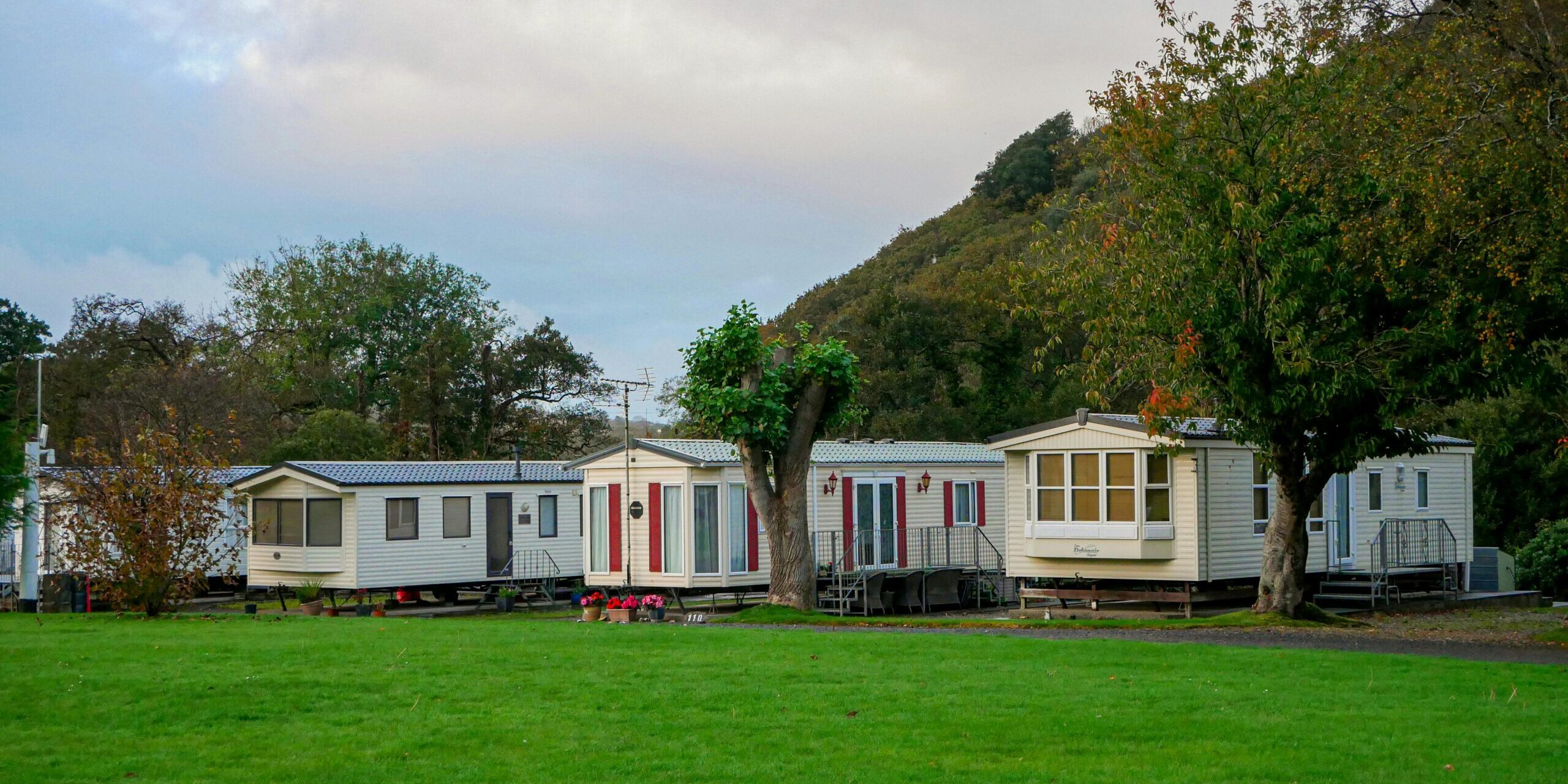
The recently-enacted New York Land-Home Property Act along with proposed federal legislation that seeks to amend the National Mobile Home Construction Safety Standards Act of 1974 are tools meant to make home ownership more affordable. A consequence of these legislative efforts will be a changing legal liability and insurance landscape for both owners of mobile and manufactured homes1 and the real property where these types of homes are located.
Although not their primary purpose, these legislative efforts at both the state and federal level will more clearly demonstrate the type of insurance that may cover any loss and who should bear the risk of any loss for accidents or incidents that occur in these types of homes and the surrounding areas. Given these legislative changes and the decades-long trend of more mobile and manufactured homeowners choosing to stay in permanent locations, it follows that local codes and state common law standards, as opposed to HUD regulations, will likely become the chief framework that owners must follow.
Prior to the enactment of the New York Land-Home Property Act in December of 2025, manufactured homes were not considered single-family homes despite being functionally equivalent to permanent dwellings. From a legal standpoint, these homes were previously treated as personal property and regulated in many instances under the New York Vehicle and Traffic Law, similarly to how automobiles are regulated. This characterization resulted in different types of impediments for manufactured homeowners, such as less favorable mortgage financing terms and tax issues that arose in legal transactions.
The New York Land-Home Property Act recognizes and perhaps helps alleviate these impediments. By allowing manufactured homeowners to reclassify their property by meeting certain requirements such as anchoring the structure to a permanent foundation and either owning the underlying land or demonstrating a proper lease agreement with the landowner, they can be treated akin to single-family homeowners.
Federal legislators and other stakeholders are also currently debating a potential change to 1974 federal legislation that mandates that all manufactured homes be built on a permanent steel chassis as part of a federal housing bill. The House of Representatives is debating this reform as part of the 21st Century Act and the Senate is discussing a similar provision as part of the ROAD to Housing Act. Title III of the proposed legislation in the Senate would redefine the definition of “manufactured homes.” All signs indicate that there is bipartisan support for these bills as lack of affordable housing has become a big talking point for politicians on both sides of the aisle. President Trump has also demonstrated support for these legislative efforts.
A chassis, a heavy-duty metal frame equipped with wheels enabling the home to be moved, has often been cited as a reason for high building costs. Without a chassis, a manufactured home builder could, in theory, remove and reuse a frame after a mobile home is delivered, thereby reducing fixed building costs. However, this chassis requirement became unnecessary as engineering practices became better over time. It is estimated that over 90 percent of manufactured homes remain in one place, and so it is anticipated that many manufactured homeowners will take advantage of this new legal and regulatory scheme.
By dispensing of this chassis requirement, construction costs should presumably be lower and more mobile homes would, theoretically, be affixed to land. The chassis requirements also arguably make it harder for homes to be built in urban areas where the need for affordable housing is more pronounced.
Owners of real property where mobile homes are situated, including private equity companies and larger commercial landowners, should be cognizant of these legislative changes as more manufactured homeowners may want to officially convert their mobile homes from personal property into real property. Lease and/or other contractual agreements should explicitly address insurance procurement and risk transfers now that many of these existing and future manufactured homeowners will be considered tenants or even owners of portions of real property.
Courts have long held that owners of real property where mobile or manufactured homes are situated cannot be liable in the absence of any proof that the landlord in fact retained control over the tenant’s mobile home or contracted to make repairs on the property. However, in the absence of formal leases, courts have considered these types of homes to be personal property or part of a bailment relationship. The confluence of this state and federal legislation could add clarity to these arrangements, which often resulted in inconsistent results. Any case law that analyzed liability for these homes under the New York Vehicle and Traffic Law would seemingly be outdated given this recent statutory change.
In the same vein, local codes, as opposed to federal safety codes, would likely have more regulatory significance. When Congress initially enacted the National Mobile Home Construction and Safety Standards Act of 1974, HUD was given the authority to implement construction safety standards for mobile homes. One of these standards was that the home be built on a chassis. The chassis requirement is, therefore, a practical matter that made manufactured homes subject to HUD codes. Without a chassis, these homes would likely be regulated by local building codes.
Real property owners should make sure that they are well-versed in local codes and state law given this changing environment. For example, in New York homeowners are not subject to New York Labor Law, a strict liability statute for injured construction workers. However, that exemption does not apply for homes that are not owner-occupied or used for commercial purposes. Any owner that supervises or controls construction work will also not be exempt.
Insurance coverage will also need to be re-examined. A typical general liability policy excludes coverage for accidents arising from ownership, maintenance, or use of motor vehicles, including mobile and manufactured homes. Automobile liability policies generally provide coverage for accidents arising out of ownership, maintenance, or use of motor vehicles. State legislation and proposed federal legislation suggest general liability policies will become more prevalent. While coverage decisions are very specific and based off policy language, exclusions, and case-law specific to each jurisdiction, the labeling of a mobile home as real property would undeniably have an influence on which policy may ultimately satisfy any claim.
1 While these terms are often used interchangeably, typically homes built before June 1976 are considered mobile homes. Homes built after this date are called manufactured homes as they must follow strict construction standards implemented by HUD (The U.S. Department of Housing and Urban Development).
Meet the Author

John Kelly
Partner, Wilson Elser
John Kelly is a partner in the New York office of Wilson Elser. His practice focuses his practice on the defense of claims related to general liability, complex torts, employment law disputes, product liability, aviation matters, trucking and transportation, and insurance coverage.
News Type
PLUS Blog
Business Line
Errors and Omissions (E&O), Professional Liability
Contribute to
PLUS Blog
Contribute your thoughts to the PLUS Membership consisting of 45,000+ Professional Liability Practitioners.
Related Podcasts

Icons & Innovators Episode 4
In this episode, Michelle Klein of Berkley Professional Liability sits down with…
Related Articles

From Foundations to Emerging Risks: Inside D&O University
The D&O liability landscape continues to evolve, making a strong understanding of…

AI Liability and Insurance: Emerging Coverage, Claims, and Silent Risk–Webinar Recap
Artificial intelligence has become embedded in everyday professional life and work. Businesses…
Claims Made Bites: Claims Made vs. Claims Made and Reported
Two similar-sounding policy forms with an important difference. One leaves the door…